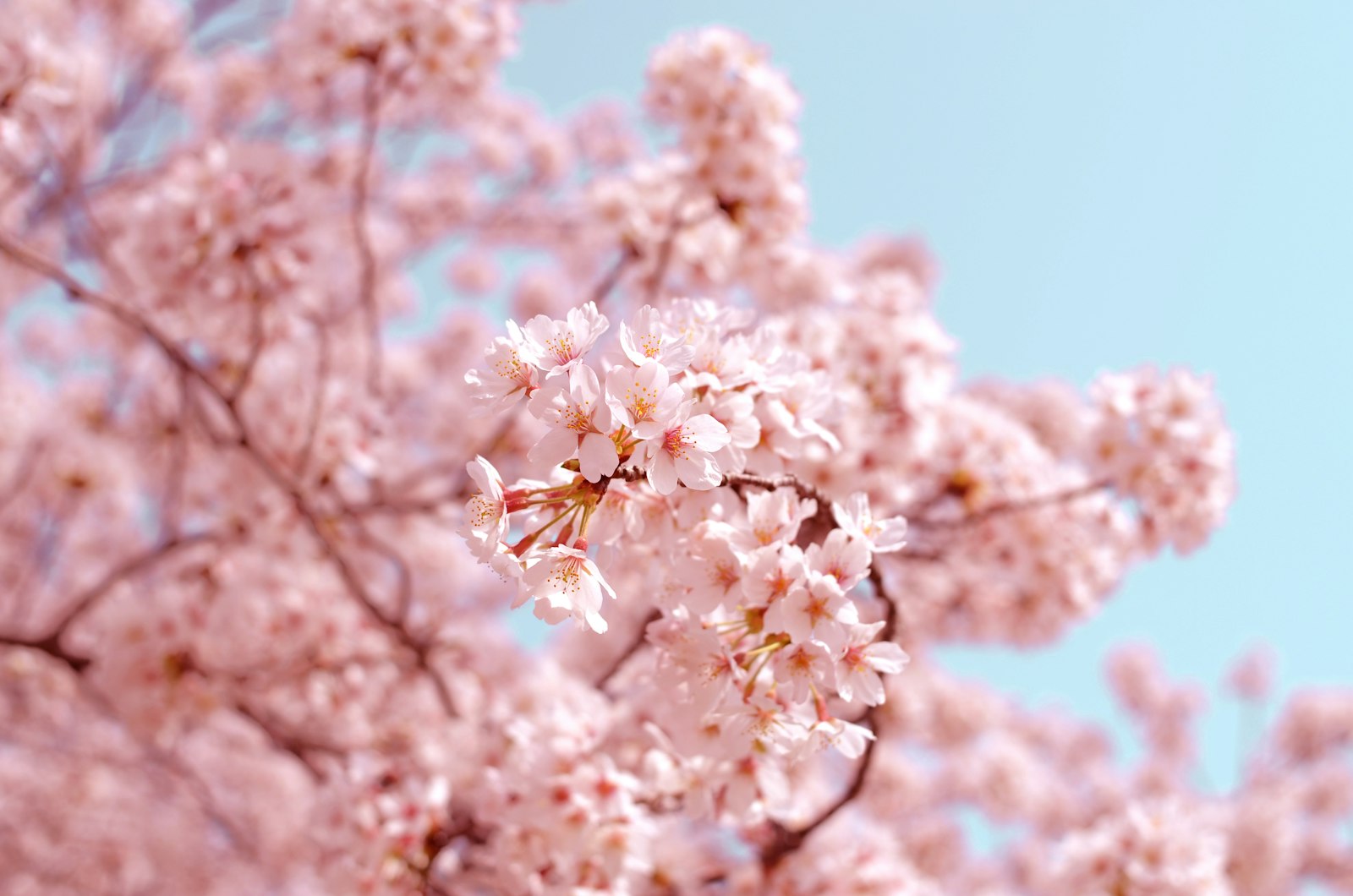
Sakura season in Japan is the most precisely timed travel event in the natural world. The Japan Meteorological Agency publishes an annual cherry blossom forecast tracking the sakura-zensen, the bloom front, as it moves northward from Kyushu in late January to Hokkaido in late April. The window of peak bloom at any given location is seven to ten days. The difference between early bloom and peak bloom is the difference between a pleasant week and the reason people return to Japan every spring for the rest of their lives. The logistics around this are not incidental. They are the entire problem.
Kyoto opens the season in late March, typically between the twenty-fourth and the thirtieth depending on the year, and the bloom moves through the city's parks and temple districts in a sequence that experienced visitors plan months in advance. Maruyama Park in Higashiyama has a single weeping cherry tree that is illuminated after dark and has been photographed so many times that it has become the visual shorthand for the entire season worldwide. It is worth seeing in person. It is also surrounded, at peak bloom, by a crowd that requires arriving before seven in the morning to experience in any kind of quiet. Philosopher's Path, the canal-side walk between Ginkaku-ji and Nanzen-ji, is the other canonical Kyoto experience, and here too the timing within the day matters as much as the timing within the season. The first hour after dawn, the walk is passable. By ten it is not.
Peak bloom lasts seven to ten days. The ryokans that matter have been booked since September. This is not a trip you plan in February.
The ryokans of Kyoto are the accommodation decision that determines the quality of the trip more than any other single factor. Tawaraya, founded in the early eighteenth century and widely regarded as the finest ryokan in Japan, has eighteen rooms and a waiting list for sakura season that runs to the previous September at the latest. Yoshida Sanso, built in 1932 as a residence for a member of the imperial family and converted into a ryokan on the wooded slopes of Yoshida Hill, has ten rooms and marginally better availability, though marginally in this context means it may be possible to book in November rather than September. The kaiseki dinner served in room is the meal that defines the category: eight to twelve courses of seasonal Japanese cuisine, each ingredient chosen for its relationship to the moment in the year, plated with a precision that is not decorative but structural. During cherry blossom season, the ingredients shift entirely to reflect what is available. The meal that arrives in late March is not the meal that arrives in mid-April.
Tokyo's bloom follows Kyoto by roughly a week, typically arriving in early April, and the scale of the city means the sakura experience is distributed across dozens of parks and riverbanks rather than concentrated in a single district. Shinjuku Gyoen has over a thousand cherry trees across its landscaped grounds, designed during the Meiji period under the direction of French landscape architect Henri Martinet alongside Japanese gardeners, and the result is a park that is both formally composed and genuinely extraordinary in bloom. Ueno Park is the other major Tokyo location and operates as the city's principal outdoor celebration venue during hanami season, the tradition of gathering beneath the trees to mark the bloom. The park fills from mid-morning and the correct approach is to arrive by eight, establish a position under a well-placed tree, and remain there as the city assembles around you. The Meguro River from Nakameguro to Ikejiri, lined on both sides with cherry trees whose branches meet overhead, is the urban sakura experience the city does better than anywhere else. The restaurants and cafes along the river open their windows fully during bloom week, set tables on whatever outdoor space they have, and run bloom-viewing menus for the duration.
Kyoto in the early morning, before the tour groups arrive, is one of the most genuinely beautiful experiences available anywhere on earth. The window is narrow. It always has been.
Nara sits forty minutes from Kyoto and thirty from Osaka by express train and is the correct half-day excursion from either city during bloom season. The deer of Nara Park are the defining feature: around 1,200 sika deer, designated natural monuments under Japanese law, wandering freely through the park and its temple precincts. During cherry blossom season the combination of deer, flowering trees, and the great bronze Daibutsu of Todai-ji behind all of it produces something that looks genuinely improbable. The deer have learned precisely how to solicit the shika senbei, the flat rice crackers sold throughout the park, and their technique is polished. The temples of Nara, Kasuga Taisha and Horyu-ji among them, are architecturally distinct from Kyoto's: older, less visited, more austere. The walk between Todai-ji and Kasuga Taisha through the deer park in bloom is one of the more quietly extraordinary hours available during the season.
Osaka closes the triangle and is the city that visitors who have covered Kyoto and Tokyo tend to overlook on a first itinerary, which makes it the right destination for anyone on a second or third. Osaka Castle Park surrounds the reconstructed castle with cherry trees and a stone moat that reflects the bloom when the water is still in the early morning. The castle itself occupies significant historical ground as the seat of Toyotomi Hideyoshi's power in the late sixteenth century, and the park around it is where the city gathers to mark the season. Dotonbori, the canal district at the centre of Osaka's entertainment quarter, is not a sakura destination but is the correct place to eat: street food conducted as serious culinary culture, takoyaki and kushikatsu and every variation of ramen, available from counters and stalls open until two in the morning in a way that Kyoto's more considered dining culture does not attempt. Kyoto to Osaka is fifteen minutes by shinkansen. The correct arrangement is to sleep in Kyoto and eat in Osaka.
The practical reality of cherry blossom Japan is that it requires planning on a timeline most travellers find counterintuitive. The ryokans, the best hotels in Tokyo, the private kaiseki dinners, the reserved tables at the restaurants worth booking: all of these are committed five to six months in advance, in September and October, by the same cohort of visitors who return every year and have learned the rhythm of the season. The official bloom forecast is not published until February at the earliest, which means the ryokan booking must precede any confirmation of dates. You commit to the late March to early April window and accept that the bloom may arrive slightly ahead or behind schedule in any given year. A slight miss is still an exceptional trip. Japan without the bloom is still Japan, which remains its own considerable argument for going.
The circuit
Late March
Kyoto · Philosopher's Path · Maruyama
Late March. Early April
Nara · The Deer Park · Todai-ji
Early April
Tokyo · Shinjuku Gyoen · Nakameguro
Early. Mid April
Osaka · Castle Park · Dotonbori
Mid. Late April
Hokkaido · Matsumae · Sapporo