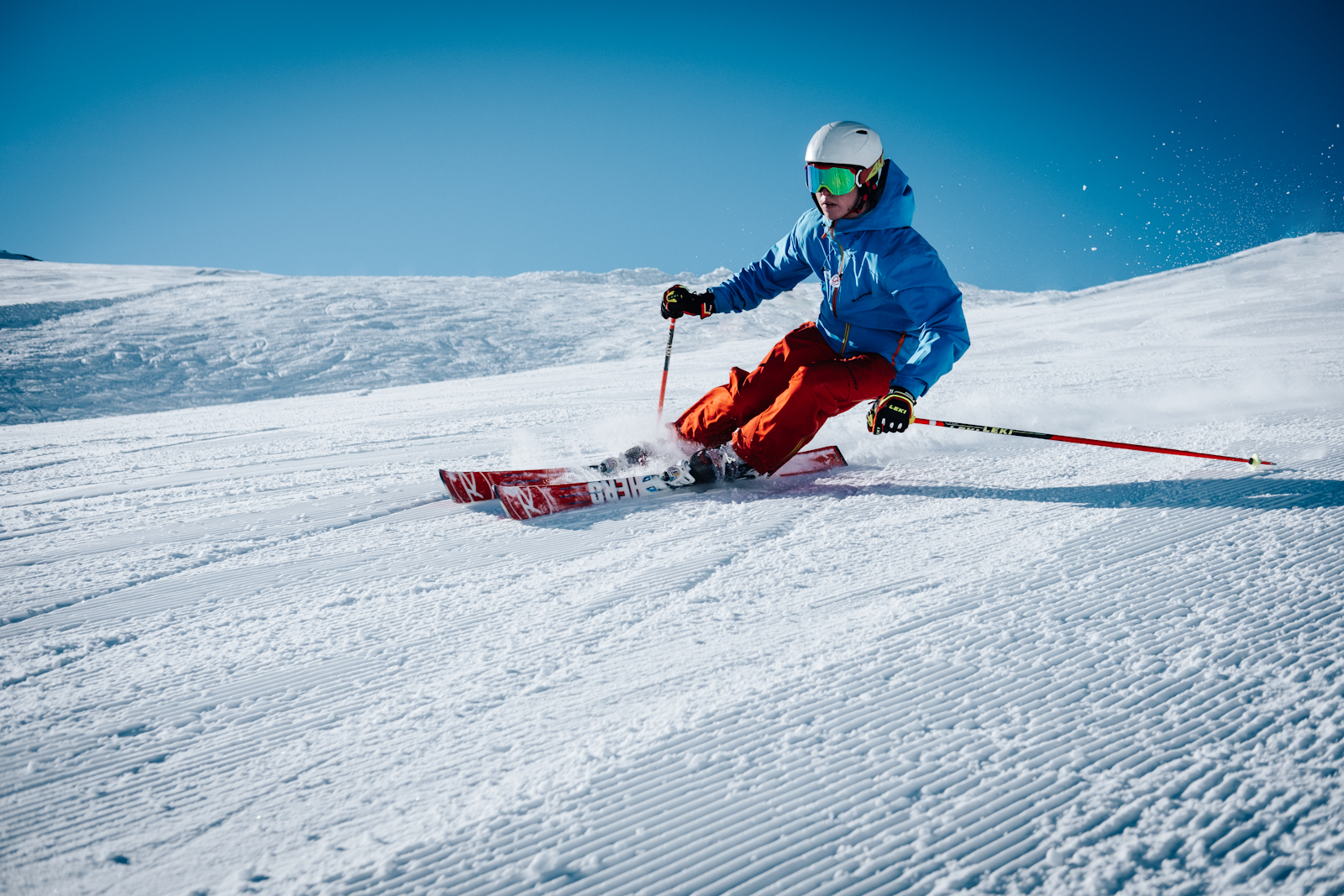
Winter in the Alps runs from mid-December to late March, and the same crowd moves through the same four mountains in a sequence that has not changed in a generation. Courchevel 1850 opens in December and closes in April. Verbier runs alongside it. St Moritz fills in January when the events on the frozen lake begin. Zermatt operates year-round but its serious season is January and February. The chalets are reserved in September. The restaurant tables are held in October. Anyone who arrives in December without a reservation already in place is working with what remains.
Courchevel 1850 is the entry point for the Alpine season and the most legible of the four resorts. The skiing connects to the Trois Vallées, one of the largest linked ski domains in the world, whose 600 kilometres of marked pistes across three interconnected valleys offer terrain at every level. The village is built around the Altiport, a high-altitude aerodrome at 2,008 metres that holds the distinction of Europe's highest paved runway. Its 537-metre slope, rising at an 18.6 per cent gradient, accommodates only specially certified mountain pilots in small fixed-wing aircraft and helicopters. Guests transfer in from Chambéry in twenty-five minutes or from Geneva in thirty-five, by helicopter or small charter, and are on the slopes within minutes of landing. The hotel addresses that matter are Le K2 Palace and Les Airelles. Both require reservations made months in advance for the Noël and February school holiday weeks, the two peaks when Courchevel operates at absolute capacity and the village becomes its most concentrated version of itself.
Four months. Four mountains. One crowd that has been doing this long enough to know which table to book first.
Verbier sits in the canton of Valais at 1,500 metres and draws a crowd that is younger and more physically committed than Courchevel, with harder off-piste terrain and a nightlife that runs considerably later. The 4 Vallées is the largest linked ski domain entirely in Switzerland, with the summit of Mont Fort at 3,330 metres forming the high point accessible by lift. The Col de la Chassoure and the Mont Gelé itinéraire hors-piste are among the most technically demanding descents in the Alps and both require a guide. Le Farinet anchors the après-ski with live bands every evening of the season. The Farm Club, a Verbier institution since the 1970s, opens well past midnight and has been the social centre of the resort's season for decades. The chalets in the village centre are reserved by October for peak weeks. The correct approach to Verbier is to book a guide, ski hard, and treat the evenings as the second programme.
St Moritz in January and February is not primarily a ski destination. It is a social season built around the frozen surface of Lake St Moritz, which hosts three events in the space of five weeks that exist nowhere else in the world. The Snow Polo World Cup, first held in 1985 and the only high-goal polo tournament played on snow, takes place over the last weekend of January: six teams of four competing on the ice against the backdrop of the Engadin peaks, with the gala dinner at Badrutt's Palace on the Friday evening. White Turf, the international thoroughbred racing and skijöring event, runs across three consecutive Sundays in February: horse racing and skiers towed by riderless horses at speed across the same frozen lake. The International Concours of Elegance brings exceptional motor cars from private collections onto the ice for a display that is formally competitive and visually extraordinary. Badrutt's Palace Hotel, which has been the address since it opened in 1896, remains the correct base: its King's Social House opens after midnight and the season's correct crowd arrives accordingly. The skiing on Corviglia is excellent and, in January, largely beside the point.
St Moritz in January is not primarily a ski destination. It is a social season that happens to have a mountain attached.
Zermatt is the mountain for those who want to ski and nothing else. The village has no combustion-engine vehicles, which means the transfer from the nearest road terminus at Täsch arrives by electric taxi or the Matterhorn Gotthard Bahn. The Matterhorn is visible from almost everywhere in the resort and functions as the visual constant of the entire experience. The Matterhorn Glacier Paradise cable car reaches 3,883 metres and connects to Cervinia on the Italian side of the massif, allowing a ski crossing into Italy and back. The combined Zermatt and Cervinia ski domain runs to approximately 360 kilometres. The Sunnegga Paradise area above the village is the correct choice for a morning run before the principal lifts fill. Chez Vrony on the Findeln slope, reachable on skis, is the on-mountain lunch that justifies the detour. Hemmi's Stadel above Furi is the on-mountain party. Papperla Pub in the village runs live music until late. The season extends later than Courchevel or Verbier, with glacier skiing available well into April and, in some years, beyond.
The logic of the Alpine season is that each resort serves a distinct version of the same winter. Courchevel for access, scale, and the most developed luxury infrastructure in the Alps. Verbier for terrain, altitude, and a crowd that measures the day by vertical metres. St Moritz for the calendar of events and the social life that is built around the lake rather than the pistes. Zermatt for the mountain itself, undiluted by everything else. The people who do the season correctly spend between one and two weeks at each of two or three of these resorts, and they do not arrive at any of them without having booked the chalet in September and the restaurants in October. The Alpine season, like every serious season, is entirely determined by decisions made before it begins.